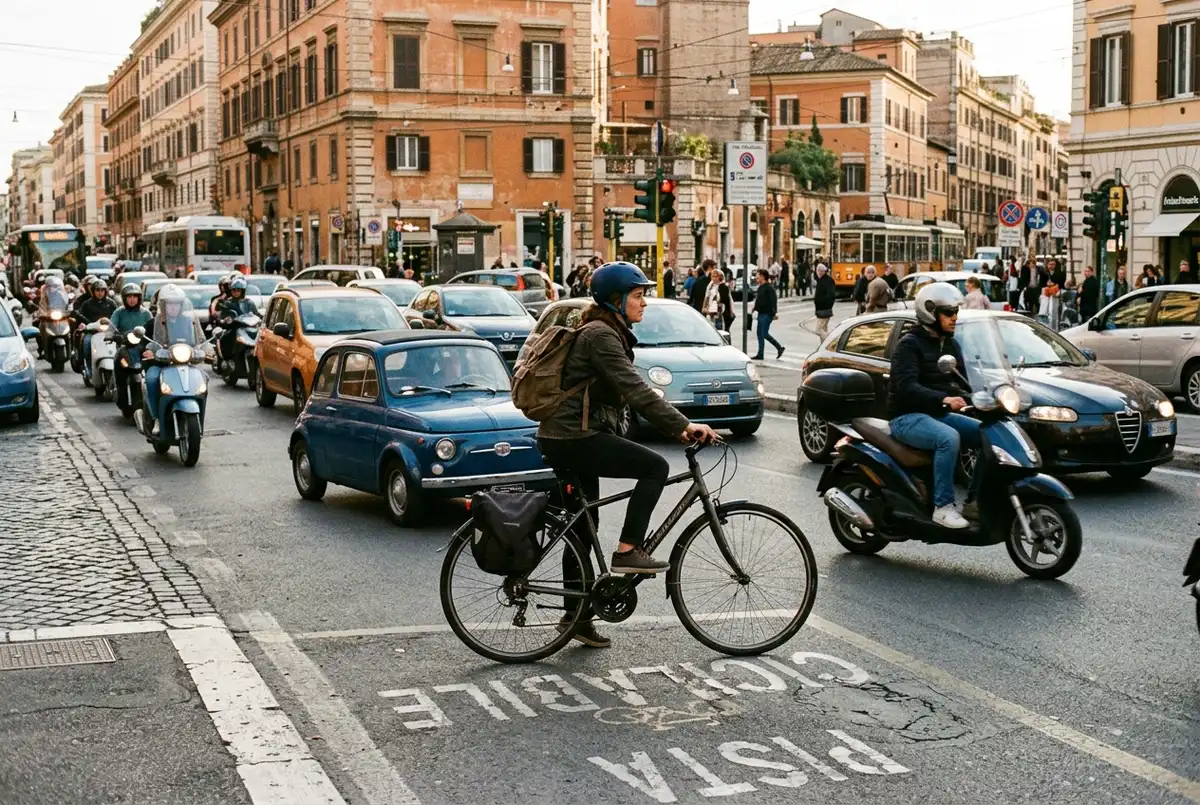
Is Rome safe for cycling? Mostly, yes, but the honest answer depends heavily on where in the city you’re riding. Here’s what I’d tell a friend asking this before their trip: central Rome’s bike-lane network is patchy and the traffic moves fast and close, so a first-time visitor is genuinely safer sticking to a quieter route or riding with a guide who knows which streets to avoid.
I’ll walk through the traffic, the bike lanes and the specific areas I’d trust for a solo ride, then tell you honestly when I think a guide is worth the extra cost. For the wider picture on cycling here beyond just safety, my complete guide to cycling in Rome covers terrain, seasons and how to decide between riding solo and joining a tour.
How Good Are Rome’s Bike Lanes, Really?
Patchy, and I’d rather be direct about that than oversell the city’s cycling infrastructure. Marked bike lanes exist in pockets, mostly along the river and in newer developments outside the historic core, but they frequently disappear mid-block or share space with parked cars and pedestrians. You can’t rely on a continuous lane the way you might in a northern European city.
My honest take: treat any bike lane marking here as a helpful guide rather than a guaranteed safe corridor, and stay alert even when you’re technically riding in a designated lane.
Is Rome’s Traffic Genuinely Aggressive Compared to Other Cities?
By northern European standards, yes, more than most first-time visitors expect. Scooters weave between lanes, drivers treat some markings as suggestions, and intersections without clear signals move fast on assumed right-of-way rather than strict rule-following. It’s not chaos exactly, Romans navigate it comfortably every day, but it’s a real adjustment for a visitor used to stricter lane discipline.
I wouldn’t call it reckless driving so much as a different, faster rhythm that takes a bit of local exposure to read confidently.
Which Streets Should a Cyclist Genuinely Avoid?
Major arteries carrying heavy bus and taxi traffic, and any intersection without a clear traffic light, are where I’d exercise the most caution. The dense, narrow streets right around the Pantheon and Piazza Navona get heavy pedestrian and scooter traffic simultaneously by midday, which makes for slow, careful riding rather than a relaxed cruise.
I’d plan any solo route around these pinch points specifically rather than assuming the whole historic center rides the same.
Are There Genuinely Safe, Calm Areas to Cycle Alone?
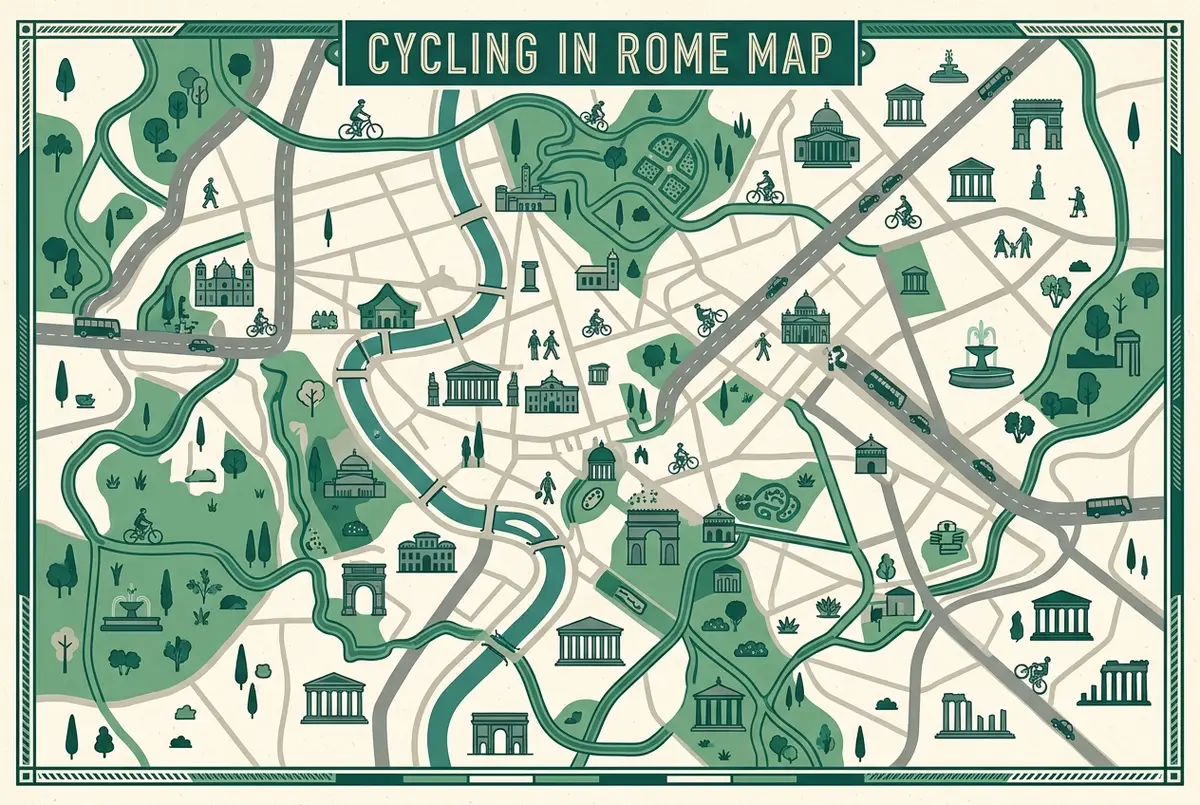
Yes, and I think this is the detail that gets lost in a blanket “is Rome safe for cycling” answer. Villa Borghese’s internal paths keep you almost entirely away from car traffic, the riverside Lungotevere path offers a long, mostly uninterrupted line to follow, and the Appian Way regional park runs largely off-road through parkland once you’re past the city’s edge. These three areas are where I’d point a cautious solo cyclist first.
Does Wearing a Helmet Matter in Rome?
I’d say yes, without hesitation, even though Italian law doesn’t strictly require it for adult cyclists. Every guided tour on this site makes a helmet mandatory or provided by default, which tells you something about how seriously local operators take it given how they navigate this traffic daily. I wouldn’t ride here without one, regardless of what the law technically allows.
Is Cycling at Night More Dangerous in Rome?
Visibility is the main added risk, cobblestones and uneven pavement are harder to spot in low light, and drivers have less reaction time to notice a cyclist. That said, traffic volume itself drops noticeably after dark, which some riders find makes for a calmer overall experience despite the visibility tradeoff. Guided night rides here plan their routes around well-lit main roads specifically for this reason.
My honest take: I wouldn’t ride solo at night through unfamiliar streets, but a guided night ride with proper lighting and a planned route is a genuinely different, safer proposition.
Should a Nervous Cyclist Book a Guided Tour Instead of Riding Solo?
I think so, honestly, and I wouldn’t feel any need to talk you out of that instinct. A guide already knows which streets to avoid, rides these routes regularly, and can read the traffic in a way that takes visitors weeks to build up on their own. If any part of this page has made you second-guess a solo ride, that’s a completely reasonable reaction, not overcaution.
My full guided versus self-guided comparison lays out exactly what a guide adds over going it alone, cost included, if you want the fuller picture before deciding.
Is Rome Safe for Cycling With Kids?
With the right setup and route, yes, though I’d be more selective about where than I would be for a confident adult rider. Villa Borghese’s paths and a guided route with a child seat or tag-along extension are far better starting points than the historic center’s busier streets. I wouldn’t take a young child cycling solo through central Rome’s traffic regardless of how confident the adult riding is.
Do Italian Drivers Actually Watch Out for Cyclists?
Reasonably well, in my honest assessment, though not in the deferential way drivers in a dedicated cycling city might. Roman drivers are used to sharing tight streets with scooters, pedestrians and cyclists all at once, so they generally expect to navigate around a bike rather than treating one as an obstruction. The risk isn’t malice, it’s density and speed, lots of vehicles moving quickly through narrow space, which puts more pressure on you to ride predictably than on drivers to slow down for you.
I’d ride assuming drivers have seen you but won’t necessarily give you extra room, rather than assuming either the best or the worst about their attention.
Is It Safer to Cycle in a Group or Alone?
A group, generally, and this is one of the clearer safety arguments for a guided tour over a solo ride. A cluster of cyclists is more visible to traffic than a single rider, and a guide setting the pace keeps everyone moving predictably together rather than spreading out and making individual judgment calls at each intersection. Solo riders lose that visibility and predictability advantage entirely.
I’d specifically recommend a guided group format over solo riding for anyone who’s never cycled in dense city traffic before, regardless of how confident they feel on a bike in general.
Are E-Bikes Safer Than Standard Bikes in Traffic?
In a specific way, yes. An e-bike’s pedal assist lets you accelerate away from a junction or match traffic speed on a short stretch more easily than a standard bike, which reduces the amount of time you spend as the slowest thing on the road. I wouldn’t call this a dramatic safety upgrade on its own, but it does remove one small source of friction at exactly the moments, junctions and merges, where friction matters most.
Should You Avoid Cycling During Rush Hour?
I’d say yes, if your schedule allows avoiding it. Rome’s morning and evening rush hours bring noticeably heavier car and scooter volume through the same narrow streets that are already tight for cyclists, and drivers in a hurry tend to give less room than usual. A mid-morning or early afternoon ride, outside both rush periods, is genuinely calmer and more pleasant for exactly this reason.
Does the Season Affect How Safe Cycling Feels?
A little, mostly through visibility and crowd density rather than the traffic rules themselves. Summer’s long daylight hours and heavier tourist foot traffic around major landmarks make for slower, more careful riding through the busiest piazzas, while winter’s shorter days push more riding into dimmer light if you’re not planning around it. I’d factor season into your route choice more than into whether you ride at all.
My Honest Recommendation
If you’re a confident, experienced urban cyclist, Rome is manageable solo, especially if you stick to the calmer areas, Villa Borghese, the riverside path and the Appian Way, and stay alert around the busier intersections in between. If you’re less confident, traveling with kids, or simply don’t want to spend your trip reading unfamiliar traffic patterns, I’d book a guided ride without any hesitation. It’s not a sign of being overly cautious, it’s the more genuinely enjoyable way to experience cycling here for most visitors. Rome’s official tourism site, turismoroma.it, publishes current information on the city’s cycling infrastructure if you want to check before you go. You can ride with a guided Rome bike tour instead if this page has settled the question for you.
Frequently Asked Questions
Is it safe to cycle alone in Rome as a tourist?
It’s manageable if you stick to calmer areas like Villa Borghese, the riverside path or the Appian Way. The historic center’s busier streets are trickier for a first-time solo rider.
Are there proper bike lanes in Rome?
Only in pockets. Marked lanes exist mainly along the river and in newer areas, but they’re inconsistent and often disappear mid-block in the historic center.
Is a helmet required by law when cycling in Rome?
Not strictly for adults under Italian law, but every guided tour on this site makes one mandatory or provided, and I’d wear one regardless.
Is it safer to cycle in Rome at night or during the day?
Traffic volume drops at night, but visibility is worse. A guided night ride with planned lighting is a safer version of after-dark cycling than going solo.
Should I book a guided tour if I’m nervous about Rome’s traffic?
Yes, without hesitation. A local guide already knows which streets to avoid and removes the traffic judgment that makes solo riding here genuinely tricky.