A bike tour in Rome is, in my view, the single most efficient way to see the city’s headline sights without a bus schedule dictating your day. Six guided rides are compared on this page, priced from EUR 45 to 67, covering everything from a four hour loop through the historic center to a countryside ride along the ancient Appian Way. If I only had one afternoon free in Rome, I’d spend it on a bike rather than on foot, and the rest of this guide explains exactly why, plus which of the six rides I’d actually book.
What Makes a Bike Tour Rome’s Best Way to Sightsee?
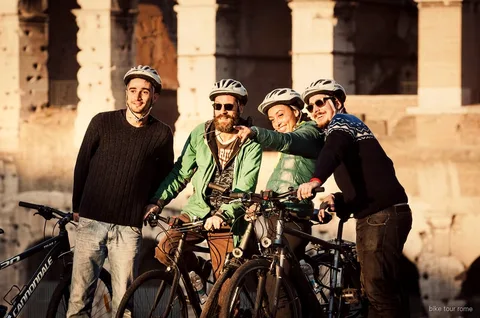
A bike covers roughly three to four times the ground a walking tour manages in the same window, without the fixed stops and waiting of a hop-on hop-off bus. In four hours, a good guided ride can pass the Colosseum, the Roman Forum, the Trevi Fountain, the Spanish Steps, Piazza Navona and the Pantheon in a single loop, something that would take a full day on foot.
The other advantage is pacing. A bike tour moves at a speed that still lets you take in a piazza or a view, unlike a car or bus that drives past too fast to register anything. Of the six rides compared here, I’d point most first time visitors toward the four hour highlights loop, since it hits the largest single set of landmarks and leaves the rest of your trip free for museum visits on foot.
How Much Does a Bike Tour in Rome Cost?
Prices across the six tours compared on this page run from EUR 45 for a three hour evening ride to just over EUR 67 for a small group sunrise tour that includes breakfast. Most standard three to four hour city or countryside rides sit between EUR 55 and 65. The bike or e-bike, a helmet, and a local guide are included on every one of them, though none of the six include entry tickets to any monument along the route.
What pushes a price up isn’t usually the bike itself, it’s the extras layered on top: a guided visit inside the Catacombs of Saint Callixtus, a food tasting, or a themed time slot like sunrise or after dark. If budget is the deciding factor, I’d book the plainer Appian Way ride over the version with catacombs and food add ons, and treat those upgrades as optional rather than assuming you need them.
Guided Tour or Bike Rental: Which Should You Choose?
You have two real options for exploring Rome by bike: join a guided tour, or rent a bike and plan your own route. A guided tour includes a local who knows which streets to avoid, a planned route that skips the worst traffic, and a fixed group pace that takes the guesswork out of navigating an unfamiliar city on two wheels. Renting solo costs less upfront but puts the route planning, the traffic judgment calls, and the risk of getting lost entirely on you.
For a first visit to Rome, I’d choose the guided option every time. Rome’s traffic is genuinely more aggressive than what most visitors are used to, and the historic center’s cobblestone streets are not intuitive to navigate on a bike you’ve never ridden before. If you already know the city well, or you specifically want a slow, self-paced loop through a single quiet area like Villa Borghese, renting on your own can make sense, and our renting a bike in Rome guide covers shops, prices and what to expect if you go that route.
City Highlights, Countryside, or Something Different
The six tours compared here fall into three real categories: city highlights loops through the historic center, Appian Way rides out into the countryside, and themed rides built around a specific time of day. Each one delivers a genuinely different experience rather than a minor variation on the same route.
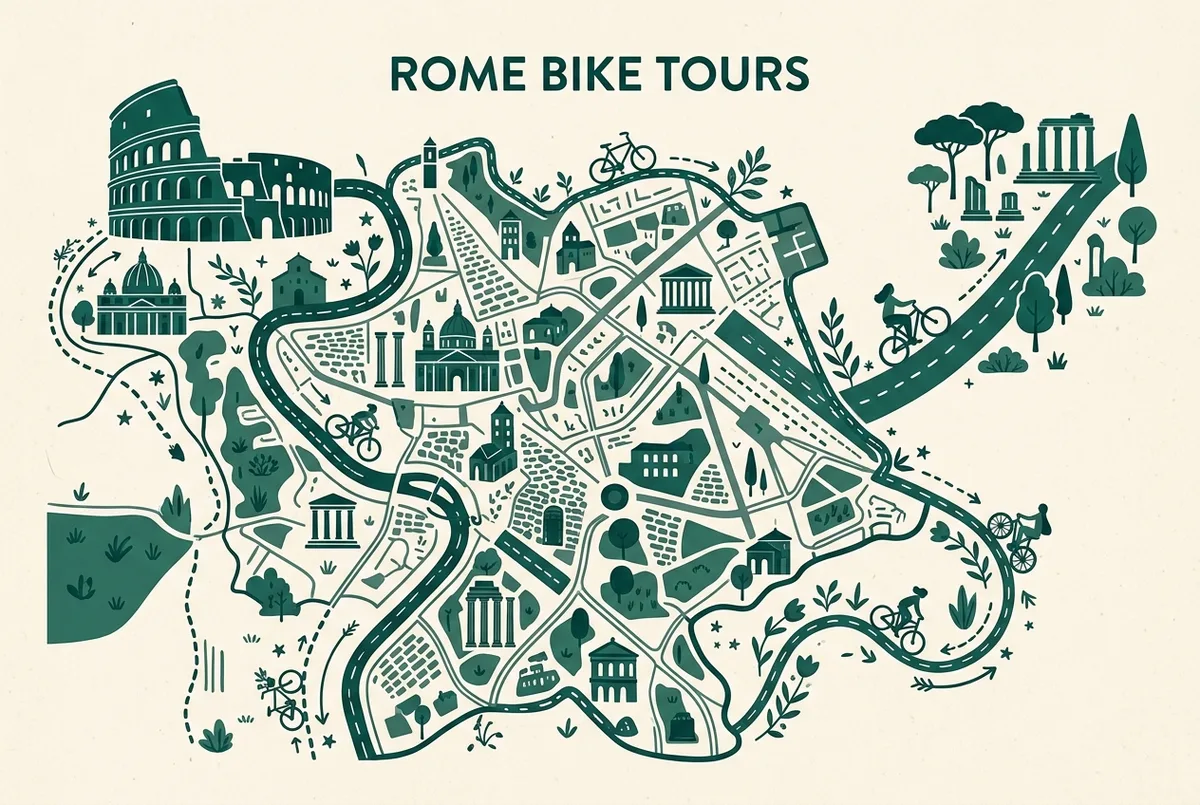
City highlights rides are the default choice, covering the Colosseum, Pantheon, Trevi Fountain and Piazza Navona in three to four hours. The Appian Way rides swap cobblestones for a mostly off-road route past 2,300 year old Roman ruins and aqueducts. Themed rides, sunrise or after dark, deliver the same city with none of the daytime crowds. If you’re trying to decide between them, our guide to every bike tour style in Rome breaks each one down by pace and who it suits, and our decision guide for choosing the right Rome bike tour walks through the whole choice by group type instead of by route.
What Will You See on a Rome Bike Tour?
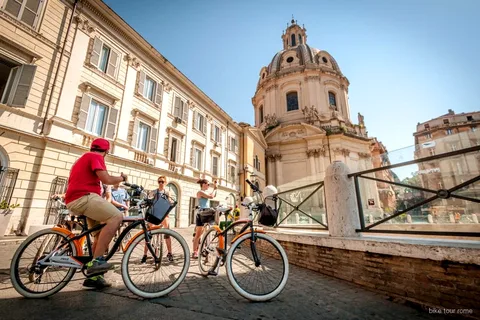
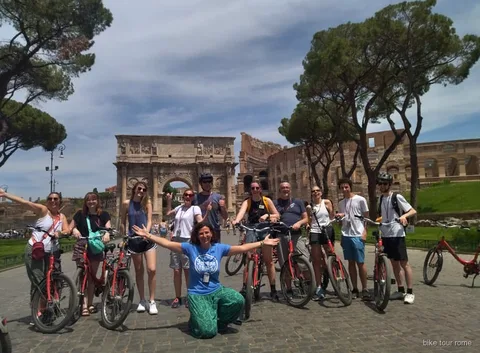
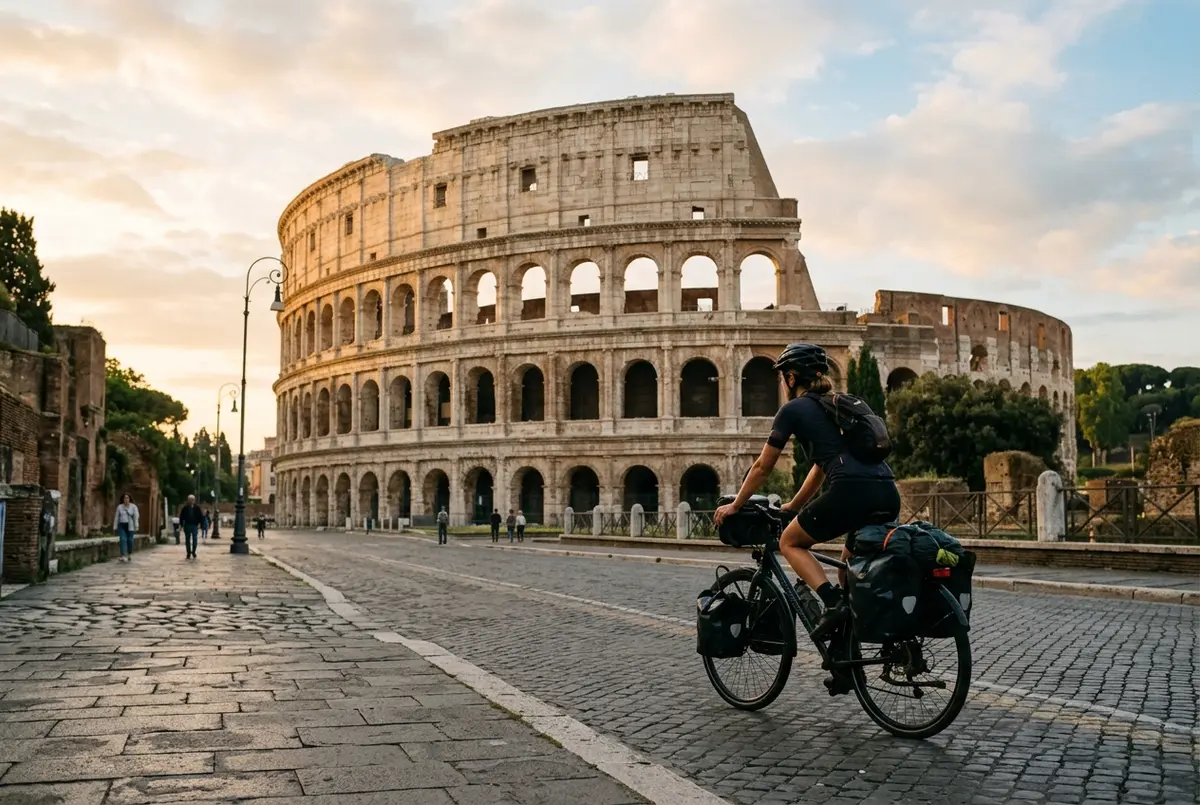
City center rides consistently cover the Colosseum, the Roman Forum, the Trevi Fountain, the Spanish Steps, Piazza Navona and the Pantheon, usually as ride-past photo stops rather than ticketed entries. Some routes add Villa Borghese, Rome’s largest central park, or Trastevere’s cobbled riverside streets, depending on the operator.
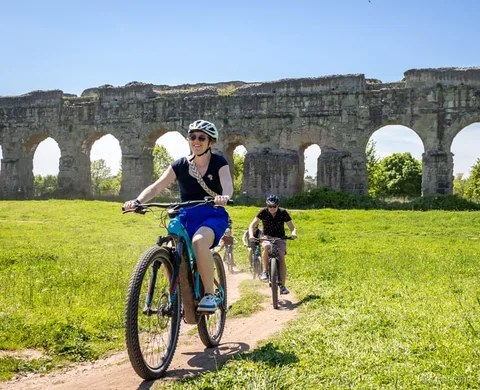
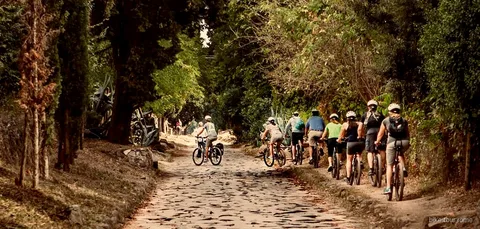
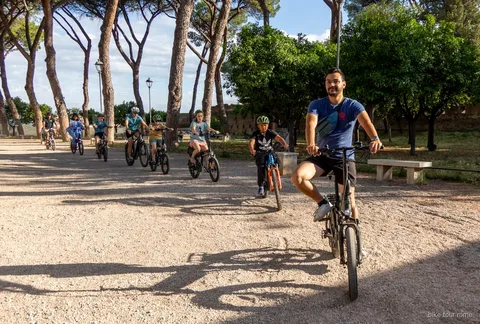
Our guide to the Appian Way bike tour covers a genuinely different sight list: the original basalt paving stones of the ancient road itself, the Circus of Maxentius, the cylindrical Tomb of Cecilia Metella, and the Parco degli Acquedotti, where Roman aqueducts stretch across open grassland. I wouldn’t skip the question of what’s actually included before booking, since none of these tours enter a monument. If getting inside the Colosseum or the Vatican museums is the priority, book that as a separate ticket on another day of your trip. The official Rome tourism board is a reliable place to check current opening hours before you plan that half of the trip.
How Difficult Is a Rome Bike Tour?
Most city highlights rides are rated leisure pace, meaning anyone comfortable riding a bike on flat ground can keep up without training beforehand. The Appian Way routes run longer, up to 27 kilometers, and are rated closer to intermediate given the distance and some rougher off-road stretches through parkland.
If you’re not confident on a bike, I’d pick the e-bike option every time it’s offered, and on every tour compared here it is. The pedal assist removes the effort from Rome’s few real inclines, like the climb toward Villa Borghese, and makes the longer countryside routes considerably less tiring, especially in summer heat. It typically costs the same as the standard bike, so there’s rarely a reason not to take it if you have any doubt.
Best Time of Year to Bike Rome
Spring, from April through June, and fall, September into October, are the sweet spot for cycling in Rome: mild temperatures, manageable crowds, and daylight that works for both morning and afternoon departures. Summer is rideable but genuinely hot by midday, which is exactly why the sunrise and evening tours compared here exist as real alternatives, not just gimmicks.
I’d book a shoulder season week over a July or August trip if my schedule allowed it, since a midday ride in direct summer sun is a different, much more draining experience than the same route at 8am or 7pm. If summer is your only option, shift your booking to the earliest or latest slot available rather than a midday departure. Our complete guide to cycling in Rome covers month by month conditions in more depth if you’re still choosing dates.
Getting to the Meeting Point
Most city and Appian Way tours meet at a shop near the Colosseum on Via Labicana, an easy walk from most hotels in the historic center. A couple of the operators compared here meet closer to Piazza Venezia instead, and one uses a mobile ticket with the exact point confirmed after booking, so always check your specific confirmation rather than assuming a fixed address.
I’d arrive with fifteen minutes to spare rather than cutting it close, since groups generally depart near the scheduled start time and a bike fitting takes a few minutes on its own. If you’re staying outside the historic center, budget extra time to reach the meeting point by metro or on foot before your slot.
Is a Rome Bike Tour Good for Families?
Some tours here genuinely welcome young children, with child seats for ages one to four and tag-along extensions for ages five to eight, while independent e-bike riding typically opens up from around age nine. Others require every rider to already be a confident, independent cyclist, with no child seat option at all.
I wouldn’t hesitate to bring a six or seven year old on a tour built around child seats and tag-alongs, since the mounting hardware and pace are designed for exactly that. I’d think twice about booking a cruiser-style operator tour for a family with a child under ten, though, since a few of those explicitly require an already excellent level of independent biking. Our family bike tour guide has more on matching a route to your group’s ages.
Sunrise, Night, or Daytime: Which Slot Should You Book?
Beyond the standard daytime loop, two themed options are worth real consideration. A sunrise bike tour rides through the historic center at dawn, when landmarks like the Trevi Fountain are genuinely empty, and typically pairs the ride with a proper Italian coffee and pastry stop. A night bike tour covers some of the same ground after dark, when St Peter’s Basilica and the Spanish Steps are lit up and the daytime crowds have gone home.
Given the choice, I’d take the sunrise slot over the night ride if I only had time for one themed tour, since empty streets and soft morning light photograph better than anything else on this list. That said, the night ride suits couples or friends looking for a relaxed evening activity more than a photography-focused morning does, so match the slot to what you actually want from the two or three hours.
What’s Included, and What Isn’t?
Across the six tours compared here, the core inclusions are consistent: the bike or e-bike, a helmet, a local guide, and usually a small extra like a water bottle, coffee, or a wine stop depending on the theme. What’s not included is just as consistent: no tour bundles entry to a monument, and hotel pickup is rarely part of the base price.
I’d always check what’s excluded before booking rather than assuming a bike tour works like an all-inclusive ticket. If a specific extra matters to you, a guided Catacombs visit, a food tasting, or a particular departure time, confirm it’s built into the listing you’re choosing rather than assuming it’s standard across every operator.
Insider Tips for Riding Rome by Bike
Book a morning or early slot where you can. Rome’s narrow streets around Piazza Navona and the Pantheon get noticeably more crowded with pedestrian traffic by early afternoon, and a bike is far easier to maneuver through a half-empty piazza than a packed one.
Closed-toe shoes are close to non-negotiable, and I wouldn’t ride Rome’s cobblestone sections in sandals no matter how hot the day gets, since pedal grip matters more than comfort on uneven stone. If you have any doubt about your fitness or confidence, take the e-bike option rather than the standard bike. It generally costs the same and removes the physical strain without changing the route.
Who Should Skip a Bike Tour?
A bike tour isn’t the right call for everyone. Pregnant travelers, anyone with a medical condition affecting balance or stamina, and infants under about one year old are excluded from most tours compared here on safety grounds, not as a formality. If any of that applies to you or someone in your group, I’d skip a bike tour entirely and look at a walking or vehicle based option instead.
It’s also a weaker fit if going inside monuments is your main goal for the day, since none of these rides include entry tickets. In that case, a dedicated skip-the-line ticket to the Colosseum or Vatican will serve you better than a sightseeing ride past the outside of either one.
Nearby: Planning the Rest of Your Rome Trip
A bike tour pairs naturally with the rest of a Rome itinerary rather than filling an entire day on its own. Most rides wrap up by early afternoon or mid-morning, leaving time for a museum visit, a proper sit-down lunch, or a walk through a neighborhood the ride only passed through.
I’d pair a morning highlights ride with an afternoon spent properly inside the Colosseum, since four hours in the saddle followed by a few hours on foot makes for a full but not exhausting day. If the Appian Way route interests you, it works well as a second-day activity once you’ve already covered the city center on a previous ride. You can compare every option side by side, including current prices and departure details, on our tours page.
Six guided rides, honestly compared: that’s the whole point of this page. Whichever style fits your trip, book with free cancellation so a change of plans doesn’t cost you anything.
Rome Bike Tour
Why go
🚲
Choice of Bike or E-Bike
Every tour here lets you swap to an e-bike at no extra cost, so hills and summer heat never have to rule out a ride.
🏛️
More Landmarks Per Hour
A bike loop covers ground a walking tour can't match in one afternoon, from the Colosseum to Villa Borghese and back.
🌳
A Quieter Side of Rome
The Appian Way route trades cobblestones for parkland and Roman aqueducts, well away from the crowds downtown.
Guided rides here run from EUR 45 for a three-hour evening ride to about EUR 67 for a small-group sunrise tour with breakfast. Most half-day city or countryside tours land between EUR 55 and 65, and the bike, helmet and guide are always included.
Is a bike tour a good way to see Rome?
Yes, if you want to cover more ground than walking allows without the fixed stops of a bus route. A three to four hour ride typically passes six to ten landmarks, which is a full day's walking itinerary compressed into a single guided outing.
Do I need to be an experienced cyclist to join?
No. Most city routes are rated leisure pace and only require comfort riding a bike on flat ground. The Appian Way routes cover more distance and rougher surfaces, so pick the e-bike option there if you're not a regular rider.
Can I choose an e-bike instead of a standard bike?
On every tour listed here, yes, usually at no extra cost. The e-bike removes the effort from hills like the climb to Villa Borghese and makes longer countryside routes far less tiring in Roman heat.
Are Rome bike tours safe in city traffic?
Guided routes are planned around quieter streets and mostly avoid Rome's busiest traffic corridors, and a local guide leads the group rather than leaving you to navigate alone. Riding solo without local knowledge is a real safety step down from a guided tour.
What's the best time of year for a bike tour in Rome?
Spring (April to June) and fall (September to October) bring mild temperatures and manageable crowds. Midsummer rides are best booked as early morning or evening slots, since a midday July ride in direct sun is genuinely exhausting.
Can kids join a Rome bike tour?
It depends on the operator. Some tours offer child seats for ages one to four and tag-along extensions for ages five to eight, while others require every rider to be an independent, confident cyclist. Check the age rules on the specific tour before booking.
What's the difference between a city tour and the Appian Way tour?
City tours ride past the Colosseum, Pantheon and Trevi Fountain through the historic center. The Appian Way tour heads out of town to ancient Roman ruins and ends up around 60 percent off-road through parkland, a much quieter ride with far less traffic.
Do bike tours include entry to the Colosseum or Vatican?
No. These are sightseeing rides that pass landmark exteriors rather than skip-the-line entry products. If going inside a monument matters to you, book a separate entry ticket for another part of your trip.
Should I book a guided tour or rent a bike and ride on my own?
A guided tour is the safer, easier choice for a first visit, since the route, pace and safety are handled for you. Renting and riding solo works if you already know the city or want to explore a single, quiet area like a park path at your own pace.
Every option on this page comes with free cancellation and no hidden fees, so compare the routes below and book the one that actually fits your trip, not just the cheapest ticket.