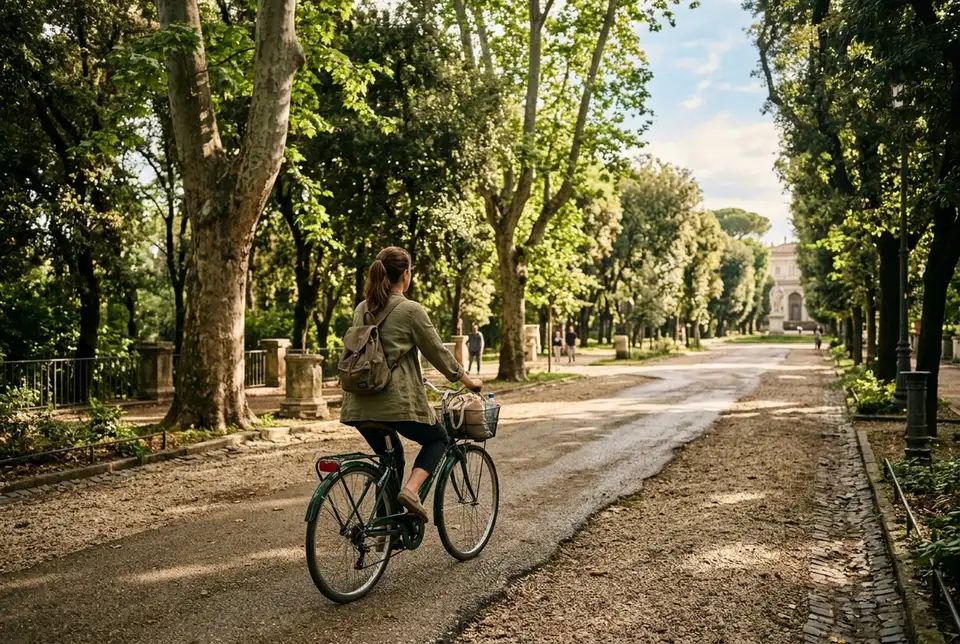
The best areas to cycle in Rome on your own are Villa Borghese’s internal park paths, the riverside Lungotevere route, and the Appian Way regional park once you’re past the city’s edge. I’d steer a solo rider toward these three and away from the centro storico’s narrow, traffic-choked streets, which are genuinely better suited to walking or a guided ride.
I’ve ranked these areas by how rideable they actually are for a visitor, not how they look on a map, and I’ll tell you honestly which parts of Rome I wouldn’t recommend cycling through alone.
Why Is Villa Borghese the Easiest Place to Cycle Solo?
Because it’s almost entirely car-free once you’re inside the park gates. Villa Borghese’s internal paths wind past the Galleria Borghese, the Pincio terrace and a series of shaded lawns, with barely any vehicle traffic to worry about. You can rent a bike right at the park entrance in many cases, which makes it one of the few spots in Rome where a nervous cyclist can relax completely.
My honest pick for anyone’s first solo ride in Rome is here, full stop. The gentle inclines and wide paths make it forgiving even if you haven’t cycled regularly in a while.
What Makes the Lungotevere River Path Worth Riding?
The Lungotevere, Rome’s riverside road along the Tiber, has stretches with a dedicated bike path that runs for a genuinely long, mostly uninterrupted line. Riding it gives you a different view of the city, church domes and bridges from water level, rather than the pedestrian’s-eye view most visitors get. It also works as a practical north-south route if you’re trying to cover distance rather than loop through a park.
I’d add one caveat: the path isn’t continuous the entire length of the river, so you’ll occasionally merge back onto a regular road for short stretches. Stay alert at those transition points specifically.
Is the Appian Way Really Rideable Without a Guide?
Mostly, yes, and I think it’s one of Rome’s most underrated solo cycling spots. Roughly 60 percent of the Appian Way route through the regional park runs off-road through parkland, meaning long stretches with essentially no car traffic at all, just ancient basalt paving stones and open countryside. The remaining stretch connects through city streets with some unavoidable traffic, which is the part I’d plan around carefully.
The honest catch: it’s a real distance, closer to a half-day outing than a quick loop, and the basalt paving is uneven enough that a standard city bike feels rougher than an e-bike with better suspension. If a long, quiet ride through history appeals to you, this is genuinely worth the effort.
Which Neighborhoods Should You Avoid on a Bike?
The dense, narrow streets right around the Pantheon and Piazza Navona, honestly. These get heavy pedestrian and scooter traffic simultaneously by midday, and the cobblestones plus tight turns make for slow, careful riding rather than a relaxed cruise. I wouldn’t call it dangerous exactly, but it’s genuinely more stressful than rewarding on two wheels compared to walking the same few blocks.
Major arteries carrying heavy bus and taxi traffic are the other spots I’d route around wherever a quieter parallel street exists. The best areas to cycle in Rome are specifically the ones that let you avoid these pinch points entirely.
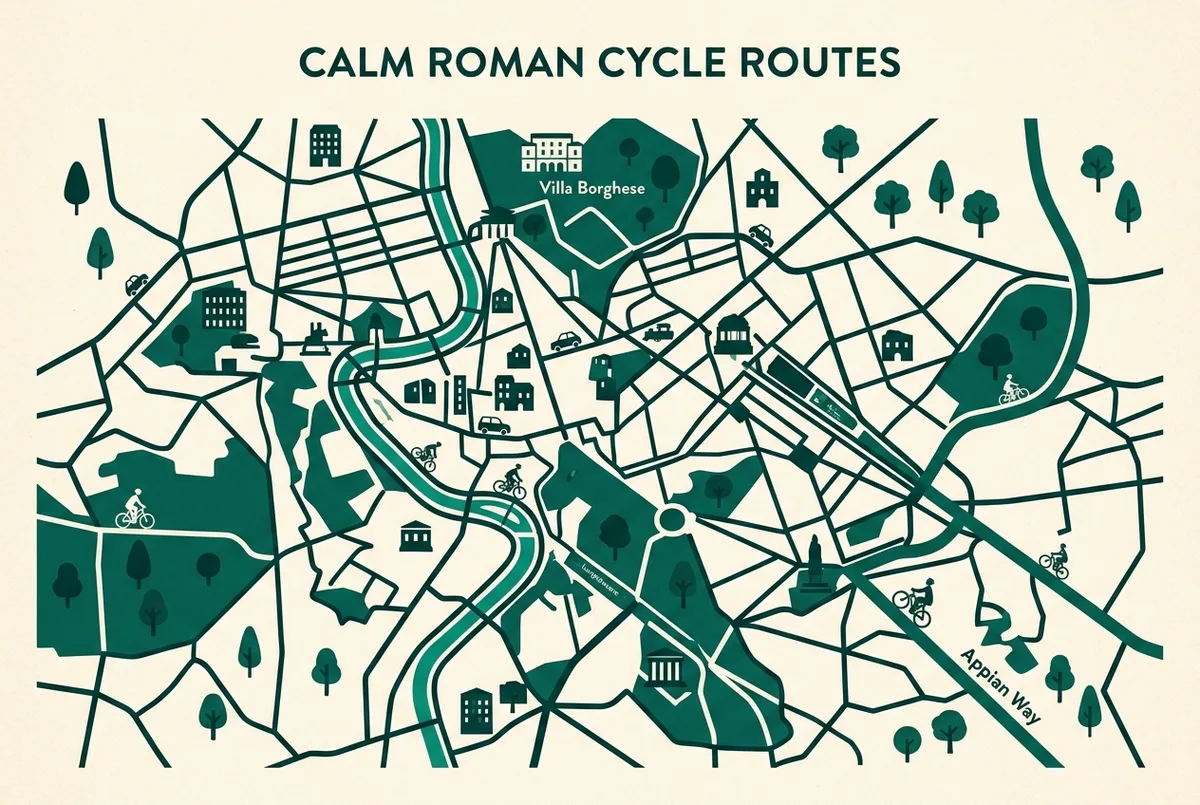
Can You Combine These Areas Into One Ride?
To an extent. Villa Borghese and the Lungotevere path connect reasonably well if you’re comfortable navigating a short stretch of city streets between them, and I think that combination makes for a satisfying half-day solo ride. The Appian Way, though, sits far enough from the historic center that I’d treat it as its own separate outing rather than trying to tack it onto the same day as the other two.
I wouldn’t try to force all three into one marathon ride. Splitting them across two days, or picking the Appian Way as a dedicated afternoon, respects how genuinely different each area feels.
What Time of Day Is Best for Each Area?
Morning wins across the board, in my experience reading how these routes get busier through the day. Villa Borghese fills with joggers and families by mid-morning but stays pleasant. The Lungotevere gets more pedestrian traffic near popular bridges by afternoon. The Appian Way is genuinely calmer on weekdays than weekends, when Roman families come out to walk and cycle the same parkland.
If you can only pick one time slot, I’d start early and give yourself the quietest version of whichever area you choose.
Should a Nervous Cyclist Still Ride These Areas Alone?
I think so, more confidently than in the centro storico at least. These three areas are specifically the ones I’d trust for a solo rider who’s less experienced with city traffic, since the car exposure is genuinely lower than anywhere else in Rome. That said, if traffic anxiety is a bigger factor for you than route choice alone can fix, a guided ride removes that worry entirely rather than just reducing it. My safety guide to cycling in Rome goes deeper into which specific streets to watch for if you do venture beyond these three zones.
My Honest Pick for a First Solo Ride
If I had to send someone out on their own with one recommendation, it’s Villa Borghese first, for the easiest possible introduction, then the Lungotevere path if you want to cover more ground. For a longer, more rewarding solo ride once you’re comfortable, the Appian Way is genuinely worth the half-day commitment, and I think it beats anything in the city center for atmosphere. Rome’s official tourism site, turismoroma.it, has current park hours and access details worth checking before you set out. If the Appian Way’s history and scenery have you leaning toward a guided version instead of riding it cold, our Appian Way bike tour covers the same route with a local who already knows every turn.
Frequently Asked Questions
Is Villa Borghese good for a beginner cyclist in Rome?
Yes, it’s the easiest solo cycling spot in the city, with wide, mostly car-free paths and gentle inclines suited to riders of any confidence level.
How long is the Lungotevere bike path?
It runs for a substantial stretch along the Tiber, though not continuously, so expect a few short merges back onto regular roads along the way.
Can you cycle the Appian Way without a guide?
Yes, roughly 60 percent of the route is off-road through parkland with little traffic, though the distance is real and the basalt paving is uneven.
Why should I avoid cycling near the Pantheon and Piazza Navona?
Heavy pedestrian and scooter traffic on narrow cobblestone streets makes for slow, stressful riding there, compared to how easy it is to walk instead.
What’s the best time of day to cycle in Rome’s calmer areas?
Morning, across all three areas, before joggers, families and weekend crowds build up through the rest of the day.
bike tour rome →